Water Damage Restoration Winder, GA
24/7 water damage restoration in Winder, GA. The restoration team pulls standing water with truck-mounted extraction, dries the structure to the IICRC S500 standard and documents every step for your insurance claim.
(888) 532-4616Leak still running? Reach 24/7 dispatch- Emergency dispatch, day or night
- IICRC S500 drying goal
- Truck-mount extraction
- Readings logged every day

What fails first here
- Storm runoff on red clay reaching crawl spaces
- Pipes in exterior walls and attics in a hard freeze
- Attic air handler pans overflowing in summer
What to do while the water is still moving
- 1
Close the main shutoff. In many local homes it sits in the garage, a utility closet or the crawl space, and the meter box at the street has a valve too.
- 2
Turn off power to any wet room at the breaker panel, and stay off wet floors near outlets, cords and appliances.
- 3
For a leak from the AC, switch the thermostat off so the air handler stops making condensate.
- 4
Move rugs, furniture and boxes off wet carpet, and slide foil or wood blocks under furniture legs that have to stay.
- 5
Take photos and video of every wet room before anything gets moved or thrown out. The claim file starts there.
In humid Georgia air, drywall, carpet pad and subfloor keep soaking up water for hours, and mold can start inside 24 to 48 hours. Extraction that starts early keeps the job small.
Call now and stop the spreadWater Damage Restoration Services in Winder, GA
Every service starts with a moisture map and ends with dry readings, whether the water came through a ceiling, up through a slab or into the crawl space.
 Water Extraction & RemovalStanding water pulled with truck-mounted extraction before it wicks into walls and subfloor.How it gets handled
 Burst Pipe CleanupSplit supply pipe and failed fittings, extracted fast and dried inside the wall cavity.How it gets handled
 Slab Leak Water DamageCopper leaks under the slab, traced by the plumber, then flooring lifted and dried.How it gets handled
 Crawl Space Water DamageRunoff, plumbing leaks and condensation under the house pumped out and dried to the framing.How it gets handled
 AC & Air Handler LeaksAttic air handler and condensate pan overflows dried out of ceilings and insulation.How it gets handled
 Appliance Leak CleanupWasher hoses, dishwashers and ice maker tubes that let go under cabinets and floors.How it gets handled
 Water Heater Leak CleanupTanks that fail in garages, closets and attics, extracted and dried before the water spreads.How it gets handled
 Frozen Pipe CleanupPipes in exterior walls and attics that split in a hard freeze, dried once thawed.How it gets handled
 Roof Leak Water DamageStorm rain through shingles, flashing and vents, dried from the attic down.How it gets handled
 Ceiling Leak Water DamageUpstairs bath and plumbing leaks opened up, dried and checked around wiring.How it gets handled
 Storm & Flash Flood CleanupThunderstorm runoff and flash flooding pulled out, cleaned and dried.How it gets handled
 Structural Drying & DehumidificationFraming, subfloor and hardwood dried to the IICRC S500 goal, not just the surface.How it gets handled
 Sewage & Septic Backup CleanupCity sewer and septic backups handled as Category 3: contained, removed, disinfected.How it gets handled
 Commercial Water DamageShops, offices and warehouses dried with business hours and stock in mind.How it gets handled
Not sure which one fits?
Describe what you see and where the water is. The walkthrough tech confirms the source and the water category on site.
Talk through what you seeWater damage dried to the IICRC S500 standard
IICRC S500 is the industry drying standard. It calls for structural drying, not just surface drying, and it treats the readings, not the calendar, as the finish.
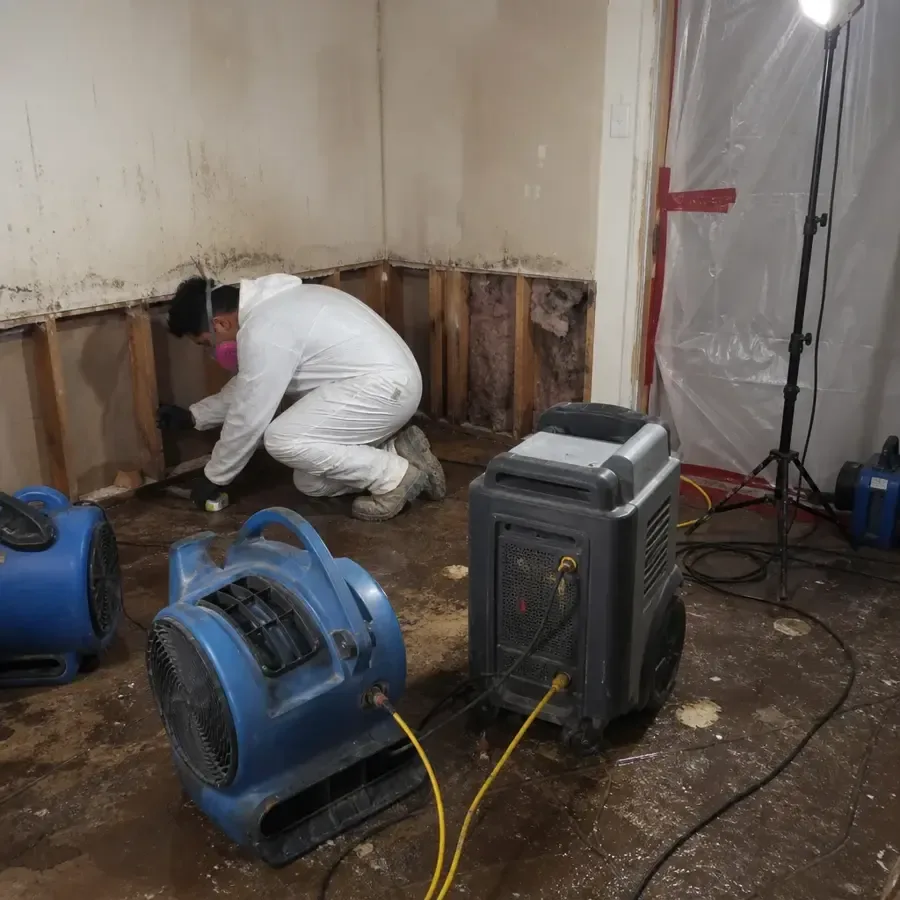
- Structural drying, not surface drying
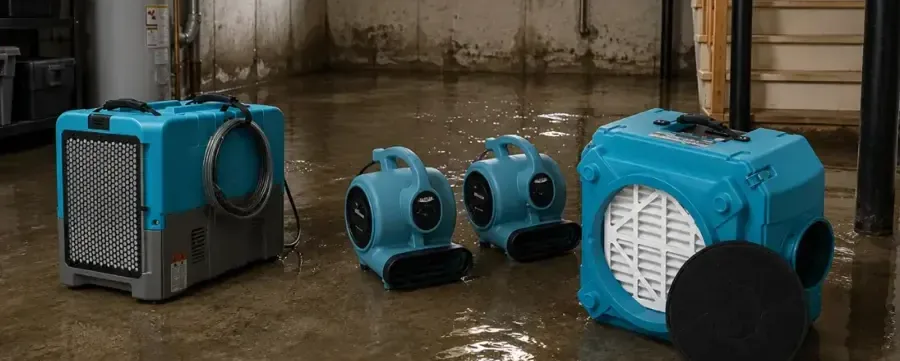
- LGR dehumidifiers sized per room
- Thermal imaging and pinless meters
- Dry goal: 2 to 4 points of a dry reference
- Day 1
Map and extract
The tech who does the walkthrough maps wet materials with thermal imaging and pinless meters, then the extraction crew pulls standing water with truck-mounted extraction.
- Day 1, later
Set the drying plan
The drying team sets air movers and LGR dehumidifiers to each room's evaporation load. The water class, 1 to 4, decides how much equipment goes in.
- Days 2 to 4
Read and adjust
Crews take moisture readings every day, log the psychrometric numbers and move equipment as materials dry at different rates.
- Final day
Prove it dry
Equipment comes out only when materials read within 2 to 4 points of a dry reference, and those readings go into the claim file.
A contained Class 1 loss usually dries in three to five days. Hardwood, crawl space framing and Category 3 losses take longer.
Find out what your rooms needAll water damage categories covered in Winder, GA
Category 1, 2 and 3 water get handled differently, and the category decides what can be dried in place and what has to come out.
Category 1: clean water
A split supply pipe, a leaking water heater or a slab leak on the cold side. Most materials dry in place when extraction starts early.
Category 2: gray water
Washer and dishwasher discharge, a toilet overflow without waste, or clean water that sat for a couple of days. Pad usually comes out; the rest gets cleaned and dried.
Category 3: black water
Sewage, a septic backup or outside floodwater. Porous materials it touched get removed, not dried, and surfaces get an EPA-registered antimicrobial.
Sewage and septic backup cleanupWhat a water damage dry-out looks like

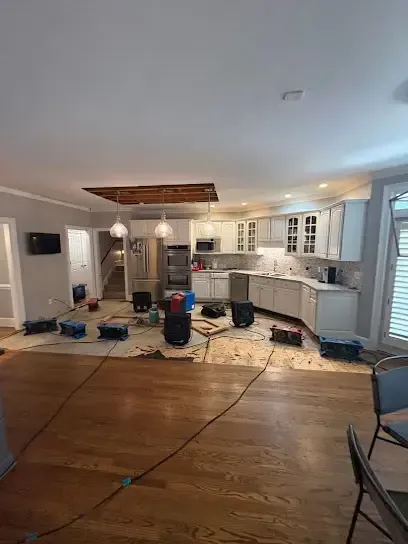
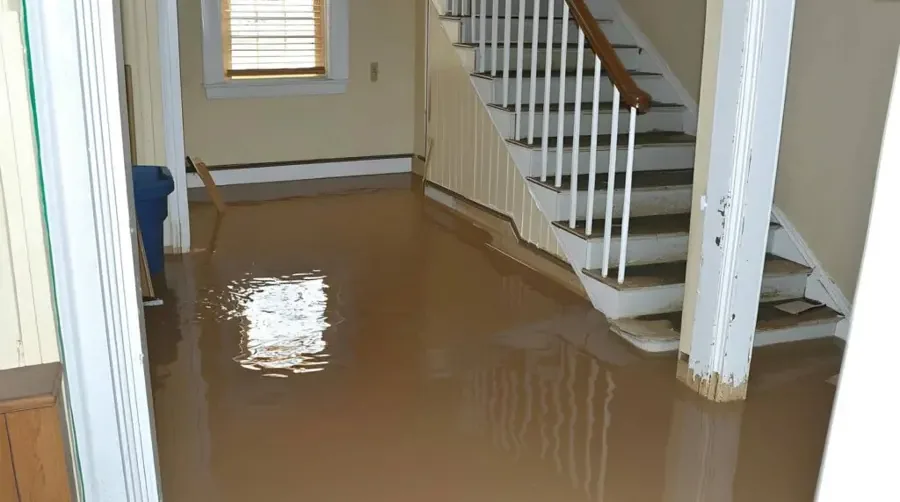
What does water damage restoration cost in Winder, GA?
Most water damage restoration jobs here run $1,200 to $8,000, and a whole-floor or Category 3 loss can reach $20,000 or more. The water category, the square footage, the material class and how fast drying started set the number.
One room, caught early
$1,200 to $3,500- Extraction and pad removal
- Air movers and a dehumidifier
- Three to four days of readings
Several rooms or the crawl space
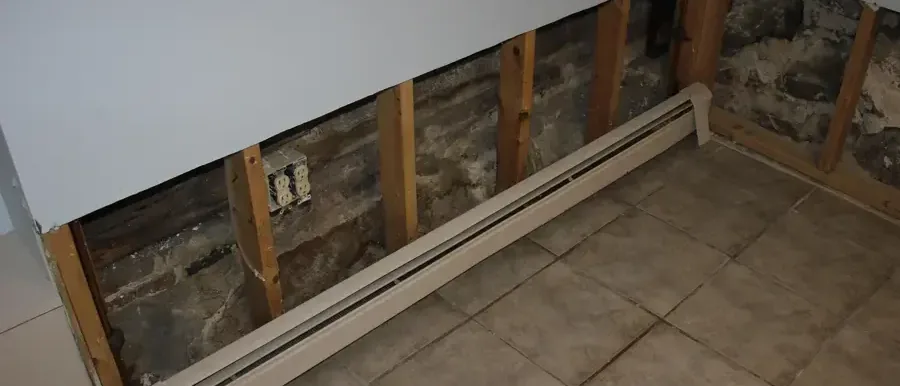
$3,500 to $8,000- Flood cuts on the lower walls
- Crawl space or subfloor drying
- Daily psychrometric logs
Whole floor or Category 3
$8,000 to $20,000+- Containment and antimicrobial
- Porous materials removed
- Extended drying and a full claim file
A firm number comes after the walkthrough. For a planning range first, try the water damage cost calculator.
One call reaches Winder water damage pros, 24/7
The restoration team covers all of ZIP 30680, from the older streets around the courthouse downtown to the Fort Yargo side and the subdivisions off GA 316, plus the Barrow County towns around it.
ZIP 30680In and around the city
Barrow County towns
The local risk profile: what Barrow County homes face
The oldest homes sit near downtown and the courthouse. Most of the housing around them went up after the 1990s as the county grew, on slab and crawl space foundations over red clay that drains slowly.
Red clay and summer downpours.
Piedmont clay sheds heavy thunderstorm rain instead of soaking it up, so runoff collects against foundations and finds its way into crawl spaces and low rooms.
Attic air handlers in long, humid summers.
Many homes run the air handler in the attic. A clogged condensate drain or a rusted pan overflows straight into the ceiling below, most often in July and August.
Vented crawl spaces.
Open vents pull in muggy air that condenses on cool ducts and framing, and a torn vapor barrier lets ground moisture up into the subfloor.
Hard freezes and aging pipe.
Most winters bring a few hard freezes, and a rare deep cold snap like December 2022 splits pipes in exterior walls and attics. Polybutylene supply pipe from the late 1970s to the mid-1990s adds risk in some homes.
Creeks and rivers.
Marbury Creek feeds the lake at Fort Yargo State Park, with the Apalachee River to the south and the Mulberry River to the north. Low ground along these streams floods in long, heavy rains.
Water damage questions from Winder homeowners
How fast can someone respond to water damage here?
Dispatch runs 24/7, so an active leak gets treated as urgent day or night. Arrival time depends on where the nearest crew is, so shut off the water and start the first steps right away.
Does homeowners insurance cover water damage in Georgia?
Sudden and accidental discharge, like a burst supply pipe or a failed water heater, is often covered after the deductible. Slow leaks, seepage and flood usually are not, and flood needs a separate policy. Coverage depends on your policy, so check with your own insurer.
Why do so many local homes get crawl space water?
Red clay drains slowly, vented crawl spaces pull in humid summer air, and gutters or yard grading often send rain toward the foundation. The crawl space moisture check shows which of those apply to your house.
How long does it take to dry a water-damaged room?
A contained Class 1 loss usually dries in three to five days with air movers and LGR dehumidifiers running nonstop. Hardwood, crawl space framing and Category 3 losses take longer. The drying-time estimator gives a rough figure for your rooms.
What is IICRC S500?
IICRC S500 is the industry drying standard for water damage. It covers moisture mapping, water categories and classes, equipment sizing and when a structure counts as dry, which is within 2 to 4 points of a dry reference material.
What should I do before the crew arrives?
Shut off the main valve, turn off power to wet rooms, move what you can off wet floors and photograph everything. Leave wet drywall and carpet in place so the tech who does the walkthrough can map it.
What is the difference between mitigation and repair?
Mitigation stops the damage: extraction, removing what cannot be saved and drying the structure. Repair puts the house back together afterward with new drywall, paint and flooring. Insurers usually treat the two as separate parts of the claim.
When does wet drywall have to come out?
Drywall soaked by Category 1 water often dries in place if drying starts early. Drywall that touched sewage or floodwater, or that has swelled, crumbled or stayed wet for days, gets cut out above the water mark, usually with a flood cut.
Why is a septic or sewer backup handled differently?
Sewage is Category 3 water the moment it backs up. The crew contains the area, wears protective gear, removes porous materials it touched and treats surfaces with an EPA-registered antimicrobial before drying. See sewage and septic backup cleanup.
How is the cost of water damage restoration figured?
The water category, the square footage that got wet, the material class and how fast drying started drive the number. Most jobs are billed by itemized scope, the same format insurers use. The water damage cost calculator gives a planning range.
Water where it should not be? Get it out before it soaks in.
Every hour of standing water reaches more drywall, trim and subfloor, and humid air slows the drying down. The restoration team dispatches around the clock.